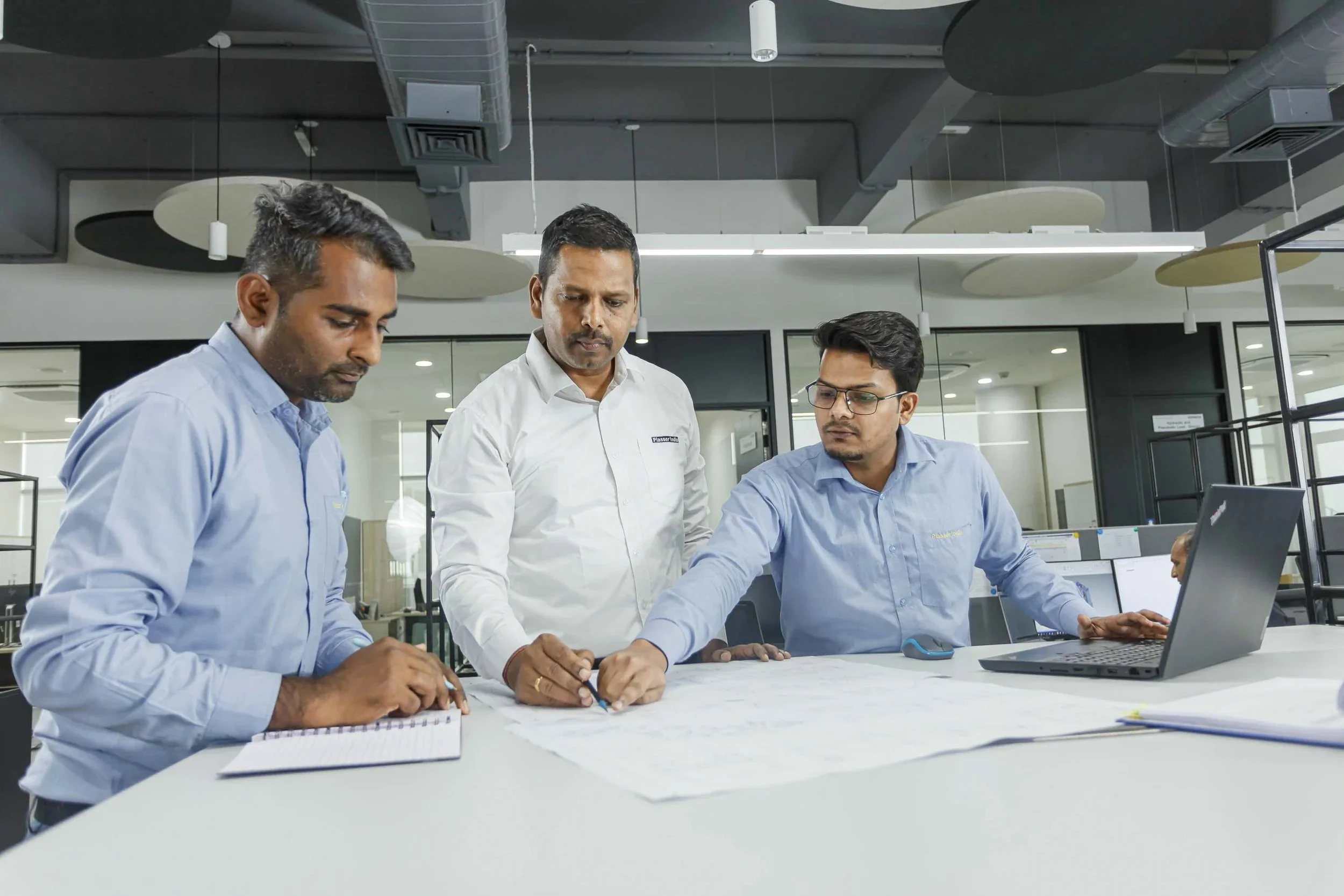
Kolkata has been an industrial city for well over a century. Engineering works and foundries line the Howrah riverbank. Jute mills stretch along the Hooghly. Steel is made in Durgapur and Burnpur and petrochemicals and port terminals run at Haldia. Kalyani, Dankuni, Uluberia and Falta add newer plants in food processing, packaging, pharma, FMCG and light engineering.
Many of these companies now sell to national and global buyers who judge them first on a website, a tender document or an annual report. Old, poorly lit plant photos send the wrong message. That is why more East Indian manufacturers are hiring a specialist industrial photographer in Kolkata instead of a general studio.
I'm Arpit Patel, an industrial and commercial photographer with 16+ years of experience photographing factories, plants, mines and construction sites across India. This guide explains what industrial photography covers, what Kolkata and West Bengal companies should photograph, how a shoot runs without stopping production, and how to choose the right photographer.
What does an industrial photographer do?
An industrial photographer documents your plant, machines, processes and people so they look as capable on screen as they are in real life. It is different from studio or event photography in three ways:
Safety and permits come first. The photographer works in PPE, follows your EHS rules and plans every position around hazards.
Production keeps running. The aim is to capture real work, not a staged shutdown.
The audience is technical. Buyers, engineers and investors notice a badly framed machine or a missing safety detail.
See our industrial photography services for examples of plant and machinery work.
Industries we photograph in Kolkata and West Bengal
Engineering, foundries and fabrication (Howrah and Kolkata)
Howrah's engineering belt and the foundries and fabrication shops around Kolkata make castings, pumps, valves, rail components, structures and machinery. Strong photos of moulding, pouring, machining and finished parts help these suppliers win orders from OEMs, railways and export buyers.
Steel and metals (Durgapur, Asansol and Burnpur)
Blast furnaces, rolling mills, molten metal and heavy cranes are some of the most powerful industrial subjects. Steel and metals photography needs careful planning around heat, sparks, dust and very low or very bright light. Done well, it gives annual reports and investor decks images that stand out.
Petrochemicals, chemicals and port (Haldia)
Haldia's refinery, petrochemical, chemical and port facilities need a photographer who understands hazardous-area zoning, permit-to-work systems and strict security rules. Wide shots of pipe racks, tank farms and jetties, along with aerial views where allowed, show the scale of these sites.
Jute, textiles and packaging (Hooghly belt)
The jute mills and packaging units along the Hooghly have a unique visual character: long spinning and weaving halls, heritage buildings and modern machines side by side. These images work well for sustainability stories, export catalogues and brand campaigns.
FMCG, food, tea and pharma (Kalyani, Dankuni and beyond)
Food processing, tea packaging, FMCG and pharma plants need clean, hygienic, well-lit images that meet strict quality and GMP expectations. Cleanroom and packaging-line photography follows the plant's gowning and hygiene rules.
Leather, power and infrastructure
The leather complex at Bantala, power plants, substations, bridges and other infrastructure projects around Kolkata also need technical documentation and progress photography. Read why it pays to hire an industrial construction site photographer.
What to photograph: a shot list for your plant
A complete industrial shoot usually covers:
Plant exterior and aerials. The entrance, buildings, signage and an aerial view that shows the full site.
Production lines and key machines. Wide shots for context and close-ups for detail.
Process steps. Raw material, processing, assembly, quality control, packing and dispatch.
Quality and testing. Labs, inspection, measurement and certificates on the wall.
People at work. Operators, engineers and supervisors in correct PPE, shown naturally.
Leadership and corporate portraits. For the website, annual report and press. See our corporate photography work.
Products. Finished goods photographed on the shop floor or in a simple studio setup. See our product photography.
ESG and safety. Solar panels, effluent treatment, green belts, safety drills and CSR activities. Read more about industrial ESG photography in India.
Where these photos are used
Website and LinkedIn: the first impression for buyers, investors and job seekers.
Company profile and brochures: printed and digital sales material.
Global tenders and supplier qualification: proof of capacity and quality. See how photography supports manufacturers bidding for global tenders.
Annual reports and investor presentations: especially for listed companies and those planning to raise funds.
Trade shows and exhibitions: large-format prints and stall graphics.
ESG and sustainability reports: visual proof of environmental and social commitments.
How we run an industrial shoot in Kolkata without stopping production
Brief call. We agree on the audience, where the photos will be used and the must-have shots.
Recce or virtual walkthrough. For outstation projects, we often do the recce by video call, followed by a short on-site walk on the first morning.
Shot list and schedule. Each shot is linked to a line, area and shift, so we move in step with production.
Permissions and safety. Gate passes, PPE, safety induction, staff consent, confidential-area rules and drone clearance.
Shoot days. Usually 1–3 days, depending on site size and the number of locations.
Editing and delivery. Colour correction and retouching, delivered in high resolution for print and web, usually within 1–2 weeks.
For more planning tips, read how to plan a factory photo shoot without production headaches.
Best time of year for a Kolkata shoot
October to March is usually the best season. The monsoon (roughly June to September) brings heavy rain and grey skies, which limits exterior and aerial work. Winter mornings can be hazy, so we plan aerials and exteriors for the clearest part of the day.
Aerial and drone photography in West Bengal
Aerial images show the full size of a steel plant, refinery or factory in one frame. Every drone flight in India must follow the Drone Rules, 2021, and the airspace zones on the DGCA Digital Sky map. Sites near airports, ports, the border or other sensitive installations can fall in restricted zones and need extra permission, so we check your exact location during planning. See our aerial photography work and our guide to industrial drone photography in India.
Beyond Kolkata: East India's industrial belt
Many companies in the region run several sites. We plan multi-plant shoots in one trip across:
West Bengal: Kolkata, Howrah, Haldia, Kalyani, Dankuni, Uluberia, Falta, Kharagpur, Durgapur, Asansol and Burnpur.
Jharkhand: Jamshedpur, Bokaro and Dhanbad, for steel, mining and engineering.
Odisha: Kalinganagar, Angul, Jharsuguda and Paradip, for steel, aluminium, power and port facilities.
Combining sites in one trip keeps travel costs down and gives all your plants one consistent visual style.
How to choose an industrial photographer in Kolkata
Before you hire, ask these questions:
Have they photographed plants like yours? Ask for industrial work, not weddings or fashion. Browse our case studies.
Do they understand safety? They should ask about PPE, permits and hazardous zones before you mention them.
Can they work around production? Look for someone who plans by line and shift.
Do they bring proper lighting? Factory lighting is rarely good enough on its own.
Can they shoot aerials legally? Check drone registration, pilot certification and how permissions are handled.
What do you own? Agree usage rights and file delivery in writing.
Frequently asked questions
Do you travel to Kolkata for industrial photography?
Yes. We are based in Ahmedabad and regularly plan shoots across India. For Kolkata and East India, we travel with our full kit and can combine several plants in one trip.
How long does a factory photoshoot take?
Most single-plant shoots take 1–2 days. Large sites such as steel plants or refineries, or projects covering several locations, can take 3 days or more.
Can you photograph a running plant without stopping production?
Yes. We plan each shot by line, area and shift with your production and safety teams, so the plant keeps running throughout the shoot.
Is drone photography allowed at industrial sites in West Bengal?
It depends on the exact location. Each site is checked on the DGCA Digital Sky airspace map. Sites near airports, ports or sensitive installations may need extra permission, which we handle during planning.
What is the best season for a plant photoshoot in Kolkata?
October to March usually gives the clearest skies and most reliable weather. Monsoon months make exterior and aerial work harder.
Book your Kolkata industrial shoot
If your plant in Kolkata, Howrah, Haldia, Durgapur or anywhere in East India needs images that match the quality of your work, let's plan your shoot. Contact Arpit Patel or WhatsApp +91 93271 54115.
Arpit Patel is an Ahmedabad-based industrial and commercial photographer with 16+ years of experience and a BFA, working with manufacturers and global brands across India. About Arpit